
Tell us about your hiring needs
Let us help you find the talent you need. We'll match the skills, experience and comepetencies to help you succeed.
News & Insights
Latest news

A Conversation with Jill Gees for International Women’s Day
In honor of Women's Day, we would like to put a strong woman in the spotlight. Today we meet Jill Gees. A former professional tennis player, she currently combines her career as Sales Director at Harvey Nash with a new challenge: HYROX. What started as a spontaneous decision after Jill was asked to fill in, quickly grew into a real passion. Even though she had just undergone surgery and was unprepared, she decided to participate anyway. Jill has now taken part in several HYROX competitions, and the sport has become an integral part of her busy life. In her own words, it's a “hobby that got out of hand.” We asked Jill a few questions about work, sport, and motivation. Howdo you maintain a balance between work and sports, and what motivates you to keep training? Exercise has always been an important outlet for me. I am naturally athletic and also played tennis professionally for two years. it helps me clear my head and cope better with the challenges of professional life. That combination creates balance. Work and exercise reinforce each other. For me, work cannot exist without exercise and vice versa. What also motivates me to keep training, even on busy days, is the feeling I get when I exercise. I've always run a lot, even though it wasn't necessarily my favorite sport. Still, I have the discipline to do things I don't like to do. HYROX suits me very well because it's a combination of strength and cardio. You constantly push yourself to the limit, and that gives you a lot of energy. Do you see similarities between a HYROX race and a challenging project at work? Absolutely. Just like at work, you're never equally strong in all areas in HYROX. Sometimes you do a race alone, sometimes in pairs. In the latter case, you really depend on each other. You have to adapt to each other's strengths, communicate, and work together strategically. It's actually just like being in a team at work. You're only as strong as the combination of all the team members. What has been your toughest moment during a competition or training session so far? And what did you learn from it? What I've learned most from competitions and training is that you can always keep improving. At the time, you're happy that you've finished the race or training session, but a few minutes later you start to reflect. What could be better? What can I do differently next time? I take that mindset with me to my work too. What does physical and mental strength mean to you? For me, strength, both physical and mental, means above all being aware of your own strengths and weaknesses. This applies both in sports and at work. Perseverance, in the broadest sense of the word, is the most important thing for me. When things don't go as you expect, it's important not to get distracted and to keep your goal in mind. That's what real strength means to me. Do you have any sporting or professional goals you are working on? I have several goals in mind for the future. For example, in three weeks, I will be participating in another HYROX competition in Mechelen. Six weeks later, I have another competition planned, this time a little further from home, in Paris. ‘Put on your running shoes and go’ My advice to others who are hesitant to pursue an ambitious goal is to find courage and keep your end goal in mind. Above all, dare to try new things and don't let doubt hold you back. In my opinion, regret mainly arises when you haven't seized opportunities or dared to try things. Just do it, try it, and experience it. Often, it turns out to be much less daunting or unattainable than it initially seems. This applies not only to sports, but also to your professional life: don't hesitate to take on a new challenge, just go for it.
Latest news

Harvey Nash Belgium announces winner of its second Contractor of the Year Award
Harvey Nash Belgium, the leading global technology recruitment business has named Laurence Bauwelinckx, the winner of its second Contractor of the Year Award in recognition of her exemplary performance in an administrative role, highlighting unparalleled customer service, remarkable flexibility in handling diverse tasks, creative problem-solving skills, and outstanding multitasking abilities, all of which significantly enhanced the efficiency and effectiveness of the workplace. Laurence will now automatically be entered into the Global Contractor of the Year process, along with all other winners from Canada, Germany, Netherlands, Poland, Switzerland, and the UK. Working with over 11,000 active contractors each year Harvey Nash has established this award and the Global Contractor of the Year Award to recognise the value these individuals deliver to businesses and economies across the world, using their skills and experience to deliver vital projects for organisations. Laurence was selected as the country winner for Belgium from a pool of highly qualified and passionate nominees. At the age of 42, boasts a robust 16-year career as a freelancer. Prior to embarking on this journey, she immersed herself in office management roles within various corporate landscapes, often navigating the intricacies of large organizations where individuals could easily feel like mere statistics. Placing a profound emphasis on human interaction, Laurence finds that receiving recognition not only validates her efforts but also fuels her enthusiasm. The diversity inherent in her work is a cornerstone of her professional identity. Her decision to transition into freelance office management was fuelled by a desire to engage in a spectrum of tasks and connect with diverse individuals and personalities. As a freelancer, she recognizes the significance of infusing a personal touch into her work, ensuring that she offers something extra and unique. Having traversed through various industries such as accounting, real estate, consulting, IT, architecture, pharmaceuticals, and more, Laurence's professional portfolio is enriched by her ownership of management and real estate companies. This entrepreneurial venture provides her with a profound sense of fulfilment, continually presenting opportunities to learn and innovate with each project. The expertise cultivated in one company consistently proves valuable, either by infusing creativity into new client projects or offering additional insights. Intriguingly, the scrutiny faced by someone with a diverse job history, often encountered in the traditional employment sphere, becomes a testament to Laurence's strength and creativity as a freelance office manager. Her adaptability and multifaceted experience only serve to fortify her professional capabilities. As she navigates her current role, Laurence collaborates with multiple clients, experiencing a role that dynamically evolves. A typical day for her begins with the anticipation of unpredictability. Following a wholesome breakfast, she delves into a spectrum of communication channels, managing emails, WhatsApp messages, Teams notifications, Messenger, and LinkedIn—acknowledging the ease of communication in today's interconnected world. Prioritizing based on the day's urgencies; she addresses the most pressing issues first. In her capacity as an executive assistant, Laurence's responsibilities span booking travel arrangements, managing diverse agendas, scheduling appointments, orchestrating events, budgeting, occasional recruitment tasks, team support, and aiding EU or US teams as needed. This diverse array of responsibilities ensures that no two days are the same. Simultaneously, in her role as an event and finance manager for Belgium, France, and Luxembourg, Laurence takes charge of financial operations, coordinates both internal and external events, supports the sales department, handles HR matters, manages payroll, and tackles a substantial administrative workload. Post-client work, Laurence turns her attention to overseeing her four companies. This involves financial stewardship, payment management, administrative duties (claiming the top position in Belgium), customer relations, and the management of her real estate business. This glimpse into her professional life is juxtaposed with her commitment to quality time during weekends, where Laurence prioritizes moments with her family, friends, and beloved pets—a pair of dogs and a cat. “I am delighted to extend my heartfelt congratulations to Laurence as she embarks on her new mission as COTY Belgium. Her dedication, expertise, and unwavering commitment have been instrumental in our success. Wishing Laurence continued success on her journey to the global title. Let us rally behind her and celebrate this remarkable achievement together!” - Ronny Lommelen, Managing Director Harvey Nash Belgium. Commenting on being named the 2024 Contractor of the Year for Belgium, Laurence added, “I am deeply honoured and humbled by this recognition. It symbolizes not merely a moment of achievement but rather a culmination of dedication, hard work, and collaboration. This award serves as a reminder of the trust and confidence vested in me by my colleagues, customers, and family, propelling me to persist in striving for excellence in every small action I undertake. This award is not just a personal achievement but also a recognition for all freelancers in my sector. The role of an all-around assistant is notably demanding in terms of time and energy. Our availability, responsiveness, and capacity to handle last-minute tasks constitute significant facets of our professional personality. These aspects contribute to the excitement and diversity inherent in our profession.” Laurence will now go through as a finalist for the Global Contractor of the Year Award, the winner of which will be announced in April. For more information about the Harvey Nash Contractor of the Year award please contact Rachel.Watts@HarveyNash.com
Latest news

Harvey Nash launches its second Global Contractor of the Year Award.
Harvey Nash, the global technology recruitment company has announced the launch of its second Global Contractor of the Year Award. Following on from the success of the inaugural award in 2023, Harvey Nash is extending this award to include even more geographies including Germany, Switzerland, Ireland and Australia. Working with over 11,000 active contractors each year, the award recognises the value these individuals deliver to businesses and economies across the world, using their skills and experience to deliver vital projects for organisations. Last year’s Harvey Nash Global Contractor of the Year Winner, Meisha Millwee was selected from an extremely strong pool of finalists from across the UK, USA, Netherlands, Poland and Belgium for her outstanding performance and commitment as a Harvey Nash contractor. Meisha then went on to be named American Staffing Association's 2024 National Staffing Employee of the Year for the Engineering, Information Technology, and Scientific Sector in the USA. Reflecting on the award Meisha said “Receiving this award was a wonderful surprise and I am truly humbled. I also recognise the importance of this award, not just for me, but also for my fellow contractors around the globe who make such an important contribution to businesses every day.” Nominations for the 2024 award will be sourced from existing Harvey Nash clients across the UK, Ireland, USA, Canada, Belgium, the Netherlands, Germany, Switzerland, Poland and Australia. This year’s award will also see contractors able to nominate themselves. All nominations will be judged by a panel comprised of global clients and the Harvey Nash leadership team before a winner for each country is named. Winners of the local country Contractor of the Year Award will then be entered into the Global Award with the overall Harvey Nash Global Contractor of the Year being announced in early 2024. Commenting on the launch of the second Global Harvey Nash Contractor of the Year Award, Bev White CEO of Nash Squared, Harvey Nash’s parent company said:“One of our core values is that we are human, and we understand the value each individual, whether a candidate, contractor or employee brings. This award not only allows us to recognise our talented contractors, it also allows us to say thank you publicly to them for all the value and skills they bring to organisations across the globe. Speaking personally to each of our finalists was a great honour and I’m very much looking forward to being part of the judging panel this year.” "The Contractor of the Year Award is a testament to our commitment to recognizing and celebrating the remarkable contributions of contractors in the tech industry. It's not just an event; it's a platform where dedication, skill, and innovation come to life. At Nash Squared our people have always been at the center of our attention. This is also the same for our employed contractors and freelancers. With the Contractor of the Year Award we want to provide them the platform they deserve." - Ronny Lommelen, Managing Director Harvey Nash Belgium For more information about the Harvey Nash Contractor of the Year award please contact Rachel.Watts@HarveyNash.com
Insights

Future Cyber Threats: The four ‘horsemen of the apocalypse’
Our CISO, Jim Tiller, answers a question he is asked often, and looks at the biggest cyber threats of the future. This article first appeared on ComputerWeekly.com. As a CISO and cyber specialist, I am often asked what I see as the big cyber threats of the future. Whilst I’m not a fan of crystal ball gazing for its own sake, nevertheless it can be helpful to think about what may be coming – and what we can do about it. So here are my four big threats – or what we may more colourfully term the four ‘horsemen of the apocalypse’ – together with some thoughts how we can prepare for them so that it doesn’t actually turn into the end of the world! 1 Virtual Humans With the advent of AI, especially natural language algorithms like ChatGPT, and their access to everything on the internet, combined with the ability to create essentially AI plug-ins for text-to-speech and imagery, very soon we’ll have more virtual humans online than real ones. Today we have botnets: networks of robots that were surreptitiously installed through malware onto computing systems around the world doing the bidding of cybercriminals. With the power of millions of computers at their disposal, industrious hackers can do everything from mine crypto to offer ransomware as a service to other criminals. Moving forward, cybercriminals and even nation states will have the ability to mobilize huge swaths of digital people seemingly operating independently but aligned with a larger mission. We see tiny examples of this today with virtual interviews resulting in unintentionally hiring a hacker or spy. Real humans are and will remain victims to fraud and confidence schemes. Even to this day, email borne attacks, such as phishing, are highly effective. Imagine a world where parents are having interactive video calls with their children asking for money. But what if that child is actually a digital fake? Given how much information there is about you as an individual, thanks to data breaches and social media posts, very rapidly there will emerge virtual replicas. Versions of you designed to leverage you for a greater gain by crossing ethical boundaries you are not willing to take. 2 Super Computing Quantum computing has leapt off the pages of sci-fi into reality and has been actively processing data not just for a few years now, but decades. Many companies have developed quantum computers, but the reason we have yet to see something dramatic is, in many ways, because they all use a different architecture. It’s like Apple and Microsoft in 1986, separate and completely incompatible. Moreover, thanks to the nuances of quantum mechanics, networking quantum computers has proven to be difficult. Nevertheless, both these barriers are diminishing rapidly. Soon the race for processing the most qubits will be shortened and accelerated as scientists solve the networking challenge. Overnight, the global human race will have access to thousands if not tens of thousands of qubits. From a cybersecurity perspective, most encryption will instantly be rendered useless. All of a sudden, your secure transaction to your bank or all the data transmitted over you VPN are no longer protected. In fact, every secure interaction you’ve ever made is likely to have been collected, allowing adversaries to go back and decrypt all those communications. The underlying basis of blockchain crumbles, permitting the ability to rewrite financial history. 3 The Expanding Ecosystem As we delve into the world of digital transformation and Web 3.0, the ecosystem of technology is becoming increasingly complex and layered. In the early days computers existed in a single room. Soon, individual computers were able to communicate. As networks expanded, along with processing speeds and availability of cheap storage, computer applications began to interact, requiring less and less standardization across platforms. With this evolution has come more points of interaction and the ability to leverage specific capabilities from a wider range of technologies, and at different layers of computing. Today, cybersecurity is just coming to grips with the challenges of third-party and supply chain risk in computing. Companies that are currently undergoing digital transformation will likely not simply have three or four layers of suppliers, but that rather closer to twenty. Moving forward the combined demand for pace, growth and innovation will require more and more from the computing ecosystem. These pressures will result in greater degrees of specialization in the supply chain causing it to expand rapidly. As such, it will be a primary target of cybercriminals because its manipulation can undermine trust in surface-level computing, permitting hackers to take control of any system without detection. 4 Smart Systems The role of technology and its importance in the physical world is increasing exponentially and will soon reach a point where computer-related issues, including everything from errors to hackers, will have a tangible impact in the real world. Today, we’re exploring self-driving vehicles, intelligent power distribution, and automation in industrial control systems, all of which have direct physical interactions with people and places. As we evolve, increasingly sophisticated technology will not only be embedded into everything from the mundane toaster to the most complex infrastructure but will also be interconnected and operated across a set of automated systems. For example, smart medical devices will become increasingly common and will quickly move beyond tactical monitoring to automated delivery of off the shelf medication, prioritization of emergency services, and even control access to various facilities. While these capabilities will greatly enhance human services, improve healthcare, and reduce accidents, cyberthreats will target these systems to perform everything from theft to terrorism. Instead of your data being held ransom, hackers may hold your car for ransom, withhold access to your home for money, or deny you medication or emergency services without payment. Getting Ahead of the Future In the face of these seemingly insurmountable challenges, is there any light at the end of the tunnel? Thankfully, I believe there is. For example, many companies are now developing quantum-resistant technologies, such as encryption algorithms, blockchain technology, and communication networks. These may help nullify some of the cyber risks of quantum computing – the challenge will be to develop the strength of the defenses in proportion to the magnitude of the risks as quantum computing takes off. In relation to the expanding ecosystem, although the supply chain is growing beyond comprehension, there are efforts such as Software Bill of Materials (SBOM), enhanced software updating and patching standards, and even IoT product labeling is being explored. Active expert thinking is being applied to the issue. When dealing with the future related to smart devices and now, with ChatGPT and its ilk, smart AI, I think we have to change our perspective of how we coexist as companies and individuals with technology. It’s less about being a hard target with strong defenses, and rapidly becoming all about being a resilient target rather than a victim. With solid planning and preparation, resilience is possible. Be aware of the risks and think ahead of them. Focus on having alternatives, out-of-band options, and, critically, awareness of potential threat capabilities so that your plan B and even plan C aren’t rendered useless. The cyber future may sound worrying – but at the same time, human ingenuity will also find ways to build new protections and mitigations.
Latest news

How to protect yourself from recruitment phishing scams.
In today's digital age, job hunting has moved online, making it convenient yet leaving job seekers vulnerable to a new kind of threat: phishing scams disguised as enticing job opportunities. These scams are designed to steal personal information, financial data, and even infect your devices with malware. At Harvey Nash we take these scams extremely seriously and want to provide you with advice on how to spot these fake opportunities. How to spot a potential recruitment phishing scam. Often using a reputable company's name, brand, logo and tone of voice these recruitment scams may on the surface seem authentic, but the following checks and tips will help you to protect yourself. If in doubt, contact the company. Do not respond to the message directly, this goes for email as well as WhatsApp messages. Go to the company’s website and contact them from there to check the validity of the offer. Too good to be true. If an offer seems too good to be true it usually is, so trust your instincts. Examples can include seemingly attractive salaries for little work, promise of earning a lot of money quickly. Relevancy. If the job opportunity you are being contacted for has no relevancy to your skills it is likely to be a scam. Upfront payment requests. Harvey Nash will never ask you for any payment to get a job, nor will other reputable recruitment agencies. Unprofessional communication. Poor grammar, spelling mistakes, unprofessional email addresses or overseas phone numbers are all tell-tale signs of a scam. Urgency of response. If the offer insists on an immediate response without giving you enough time to think or research, be cautious. Unsolicited links or attachments. Never click on a link or open an attachment that you suspect to be a scam. What to do if you suspect a job scam using the Harvey Nash name or logo? If you are unsure if a Harvey Nash communication or job offer is genuine, please contact Harvey Nash directly by emailinginfo@harveynash.com. If contacted through WhatsApp we would also suggest blocking the sender and reporting the account.
Insights

Hello ChatGPT, RIP software developer?
George Lynch, Head of Technology Advisory at NashTech shares his thoughts on what generative AI mean for software developers. This article first appeared on ComputerWeekly.com. This year has seen a remarkable explosion of interest in Generative AI. Go back just six months, and most people had never heard of it. Now, it seems as though everyone – from tech professionals to students – is using it and experimenting, in particular, with the ‘poster child’ ChatGPT. This has also generated increasing discussion of whether AI and Gen AI spell the end for human roles, including in software development. Does ChatGPT and its Gen AI cousins (such as Bard, Copilot and Bing Chat) mean the demise of the software developer – given that Gen AI can already generate code snippets? It occurred to me that a good first step in considering this question was… to ask ChatGPT. As always, it gave an instant, eloquent answer, and the thrust of its response was ‘no’. ChatGPT and similar language models, it wrote, “are unlikely to replace software engineers entirely”. This is because software engineering “involves much more than just natural language processing” and requires a range of skills such as problem-solving and collaboration that are “beyond the scope” of Gen AI. However, it did also say that Gen AI “can automate certain aspects of software development” and “augment the capabilities of software engineers.” Clearly, then, it’s not a case of ‘RIP software developer’ – or at least, not yet. But at the same time, there is no doubt that the advent of Gen AI will bring about significant changes and disruptions. Field of opportunities It’s helpful to divide the impacts into opportunities and risks. So, I’ll start firstly with the many positives. Gen AI will significantly speed up certain aspects of the software development process. It can already manage some of the lower-level tasks, such as entry-level code writing, code snippets, testing and documentation. It can also write excellent comments in code – something software developers tend to be less enthusiastic about doing. And that’s just as at today. These capabilities could (almost certainly, will) rapidly improve and increase going forward. What catapulted ChatGPT into the mainstream was its ability to leverage modern advances in computing power that allow Large Language Models (that underpin ChatGPT) to be trained in a relatively short period of time. The potential for Gen AI to leverage advances in quantum computing could open up even more opportunities for developers. Who knows what agile will look like when Gen AI really develops? Imagine sprint cycles of not two weeks but two days or even two hours! The speed and productivity could be beyond our wildest dreams. The challenge will be handling all the code generated, curating it and managing it. In short, there is massive potential to do things faster, potentially more cheaply, and to spend more of the human time involved on the higher-end, value-adding aspects. These could all be huge positives in terms of productivity and client delivery. I don’t think there’s any question that senior developers and engineers will always be needed – they are where art meets science, they have the experience and the know-how and the creativity/problem-solving ability to bring it all together. The role of the programmer and indeed business analyst will still be to elicit requirements from clients that can then be converted into prompts for GenAI to generate, test and document code snippets. These will still need to be woven into the fabric of the overall solution. It’s also worth remembering that to get the most from Gen AI, you need well-constructed prompts. In a way prompting Gen AI is a protocol all of its own, akin to pseudo-code. Gen AI at the moment does not remove the need for thinking about how a software solution needs to be structured, which for the most part is the biggest value a software developer brings. A range of risks We must be honest and say that Gen AI does represent a threat to junior roles and entry level tasks. However, in a way this is no different to the new frameworks and automation tools that keep appearing in the market. It’s a factor the IT industry is already used to living with. It may be more pronounced with Gen AI, however, as clients may expect software firms and consultants to reduce the size of their (human) teams due to the fact that they can use Gen AI – either that or get jobs done faster (or both).An inflection point may therefore be coming. But tech has always been resilient and adaptable. It always reinvents itself. I have no doubt that new jobs and roles will be needed to support Gen AI (prompt engineers for example) that many junior team members can fill. Gen AI will be a disruptor, but I am confident that the industry will embrace Gen AI as it has other advances in computing science. Whilst the industry will not only survive but thrive, the level of disruption Gen AI has caused and will continue to create may be a step too far for some digital leaders. They may decide to step back, allowing a new crop of leaders to step forward. But there are other threats or risks that need to be managed, not just those around jobs. There is arguably a danger of stagnation if Gen AI can only generate code similar to code used to train the underlying models. Will it ever be able to make innovative leaps forward? This is where human intelligence will likely always be needed and will remain at a premium. Then there is the risk of error. There have already been cases of Gen AI being ‘confidently wrong’, suffering from ‘hallucinations’ caused by a lack of data, dirty data, or other constraints/errors in the models. Gen AI’s outputs, therefore, need to be checked, tested, validated etc – another area where humans are likely to keep their jobs. It is essential that this happens. Otherwise, the speed at which false and/or malicious information (or code) could spread could be truly frightening and have potentially serious consequences. Advice to digital leaders, consultants, practitioners So where does this leave everyone in or connected to the IT industry? My five key pieces of advice are as follows. Try it out. Actively engage, test it, and experiment. Don’t be held back by the ‘fear factor’. Be transparent within your business and with your own clients that you’re using or trialling Gen AI. After all, they probably are too! This can open up valuable exchanges of experience, insights and sharing. Trust, Risk, Security – these are the three key lenses to assess Gen AI through. Stay focused on those. Can you trust the outputs; is it introducing any substantial risks; is it safe and secure? Treat Gen AI like any other tech you’ve used, implemented or experimented with in your career. Apply the same principles and best practices that have always guided you. Don’t try to build your own – the cloud providers are all developing a host of applications and services, so make use of those. We are entering the “Gen AI as a service” era. As an example of how we are approaching it at NashTech, we’re actively trialling it and are about to start using a ChatGPT product, which we have developed and fine-tuned ourselves based on GPT4, for first line tech support for clients. A place to thrive These are exciting times. No one can really be sure of the scale of the changes to come, but we can be sure that they’re going to be significant. The advent of Gen AI has parallels with the advent of low-code/no-code in the last decade. Although low-code has replaced bespoke software development in many ways, there are actually more software developers now than a decade ago. This is because low-code/no-code, and also Gen AI, will always focus on the low hanging fruit of software development. Once those fruits have been picked, forward thinking enterprises are keen to climb the tree further for the next innovation, and usually that requires bespoke work. How high is the tree and will Gen AI/low-code ever get to the top of it? We think very, very high, and no. So, I don’t believe there is any danger of ‘RIP software developer’. Tech will remain a place where humans can thrive, building on the ever-more sophisticated outputs that AI brings us.
Insights

Five non-traditional talent pools that will help CIOs plug skills gaps
With 70 per cent of organisations struggling to keep up with the pace of change due to a skills shortage, digital leaders need to get creative with filling those gaps. Lily Haake, Head of Technology & Digital Executive Search at Harvey Nash and George Lynch, Head of Technology Advisory at NashTech share their thoughts in this article, which first appeared on ComputerWeekly.com. The technology market continues to be hampered by severe skills gaps and talent shortages, a problem which shows no sign of abating. In the 2022 Nash Squared Digital Leadership report, 70% of digital leaders said skills shortages are preventing them from keeping up with the pace of change. Everything from data analysts to cybersecurity specialists and technical architects are in short supply and in high demand. There are many facets to a successful talent recruitment strategy – attractive remuneration, flexible working arrangements, a strong brand, and a clear and compelling employee value proposition – but another key aspect is who you target. We would argue that exceptional times mean CIOs and other digital leaders must look beyond the traditional, established intake groups and channels. Fishing in non-traditional pools needs to become an integral part of the talent strategy. Here are five non-traditional groups/approaches that we believe are rich in potential, along with our thoughts on how to access them, based on what we are seeing amongst our clients in the market. 1. Recruitment remotely from overseas In the post-Covid, hybrid working environment, a new truth is being established: anyone can work for anybody from anywhere. Last year’s Digital Leadership Report established that this has already become a pattern – a quarter of UK organisations said that they had begun to recruit people based abroad. It’s an extraordinary thought that you may have people who are part of your team that you’ve never physically met – but it’s a reality today. Talent sourcing from overseas is no longer a cost-driven decision, but rather a simple matter of availability. We are seeing evidence of this growing trend in the tech sector, with Home Office data recently showing that the number of applications for new skilled worker visas and visa extensions for programmers and software developers were up 36% in the third quarter of 2022 compared to the first quarter of 2021. If the talent exists in another market, why not bring it on board? Employment law and regulation can be a barrier in some cases but is rarely insurmountable. Accessing this talent is partly about finding a way to recruit with a global reach and mindset, and clearly, partners who have an international presence can help here. It’s also about taking advantage of today’s ‘global village’ – people are more connected with other people through social media and networking sites, so take advantage of that through contacts, recommendations and targeted outreach. 2. Automation and generative AI If you can’t find the people, could a machine do it for you instead? This may apply more to processes than whole roles, but what we’re seeing amongst technology teams is that they are eager embracers of generative AI in particular to help them do more with less, more quickly. In the tech team context, it doesn’t directly replace the need for people, but it can help them become more productive. This can have a longer-term easing effect on the recruitment challenge – instead of bringing in three people, maybe one person with expertise in using generative AI will achieve the same results? And that person can then help upskill the rest of the team so that they can harness it too. As a digital leader, make sure you’re actively exploring the possibilities of ChatGPT, Microsoft 365 Copilot, Github Copilot and the proliferating array of generative AI tools coming onto the market. And don’t forget ‘traditional’ automation too – you’re used to helping the business automate its workflows and processes, but are you turning the lens onto your own function as well? 3. Low Code/No Code It’s a simple equation: moving more technology onto low code/no code platforms will mean that fewer human tech skills are required. Rather than a software engineer, for example, a technical business analyst may be able to use a drag-and-drop platform to build an app themselves – perhaps with some extra support around specific aspects of security and data. It’s fair to say that low code/no code solutions are often regarded with some antipathy by traditional engineers and coders. Leaders need to be sensitive to this. But it feels like we have reached an inflection point. There is undoubtedly a middle ground where it can be exactly the right solution – and one that helps manage down the skills shortage pressure. 4. Cross-training and returners The problem is not that talent has disappeared – it’s how to access it. It’s essential to keep your intake channels open to as wide a range of sources as possible. Graduate intake is obviously key for some organisations, but less traditional mechanisms such as apprenticeships and programmes specifically geared to attracting more diverse talent are gaining huge traction. It’s also about recognising talent and ability at every stage of the career lifecycle – returning mothers, for example, and older workers looking to get back into the workforce. Don’t overlook the ‘double deeps’ either – people who are already working for you in one role, who worked in a technology role earlier in their career. They may need some support and upskilling, but there could be a wealth of technology talent hiding in plain sight. There are providers that can set up and run targeted talent intake schemes for you at pace. For example, Black Valley who specialise in recruiting black heritage tech talent in London, while at Harvey Nash a number of providers are supporting us with our own hire-train-deploy scheme, NextGen, which will launch next month. Meanwhile, there is a plethora of jobs boards focused on specific groups such as returning mothers. Understand what’s out there and develop your strategy to leverage it. 5. Outsourcing Outsourcing is not a ‘new’ tactic by any means – but it is changing. Whereas it used to be primarily about handing over a brief for a product or service and letting it run, we’re seeing organisations looking at their outsourcing providers very much as an extension of their own teams. It is less a case of ‘them and us’ now, and more about finding a service provider that supplements the team’s available talent and resources. You could almost say that outsourcing has become more like insourcing now! As a digital leader, ask yourself whether your outsourcing arrangements are helping strengthen your talent position rather than merely providing an arms’ length service. Is it enabling a process of co-creation? These are five non-traditional talent pools that we regard as key – but arguably there is a sixth, too: not doing a project. Key here is discussing the resourcing strategy of potential projects right up front, even before the project is signed off. What technically might look good on paper will stay there – on paper – if there is no one available to build it and often, deciding not to pursue a project or implementation where there are skills gaps is simply the more pragmatic and productive option. Or, alternatively, choose a technology that might be a slightly less bleeding-edge solution for which you do have the skills required. Talent is an ongoing challenge and there is no ‘silver bullet’. But widening your perspective has become an indispensable part of the solution. Think about a broader set of talent groups and, with your recruitment provider, work out the most effective strategy to reach them. Think too about how you can make emerging technology work harder for your own team. These measures won’t solve the problem on their own – but they could have a significant positive impact.
Insights

We have lift off… The opportunities and risks of generative AI
Melanie Hayes, Chief People Officer at Nash Squared, and Bill Boorman, Technology and Talent Advisor, discuss how generative AI theory is now being put into practice. This article first appeared on ComputerWeekly.com. It feels like we’ve been talking about the potential of AI and machine learning for years. So much so, that some people may have become sceptical about the extent to which it will all actually happen. But now, the remarkable rise of generative AI shows that it’s here and it’s real. ChatGPT and other generative AI applications are lifting off like rockets. They’re becoming embedded into ever more products and contexts. Millions of people – inside and outside the work environment – are trying them out. For those with long memories, it’s reminiscent of when the internet and email finally became available and changed everything. There was a huge leap, followed by a number of years of working out what it all actually meant for how we work and carry out the tasks that make up our jobs. With the advent of generative AI, the speed of change is set to become faster than ever. Individuals, businesses, regulators and governments have all got to work out how to keep pace. Sam Altman, CEO of OpenAI, recently told a US Senate committee that an agency needed to be created to regulate AI, warning that rogue AI could create “significant harm to the world”. The EU, meanwhile, is developing an AI Act which will include the regulation of ‘foundation models’ such as ChatGPT. Any such regulation will have its work cut out to keep covering all the bases. Productivity supercharge As custodians of the working culture – and the rules of engagement – HR professionals need to be in the vanguard of all this. There is no doubt that generative AI can and will impact on almost every job. There’s no role that wouldn’t benefit from some level of AI and/or automation, after all. First and foremost, it represents a huge opportunity to make individuals’ roles more productive. Generative AI can take away enormous swathes of the admin-based ‘heavy lifting’ that takes up so much of our time. Drafting communications, creating templates, researching subjects, transcribing notes – these can all be revolutionised with ChatGPT and its kind. Applications like Microsoft Copilot can create meeting notes from a verbal discussion, including who said what, where people are aligned, where they disagree and suggest action points. The days of appointing a note-taker who has to spend a couple of hours writing up a summary may soon be gone. Good news for junior team members everywhere! Because they learn from the feedback you give it, these applications can get better and better and also evolve their output to more accurately capture the tone of voice you want. This is something that both of us have experienced. For instance, Bill recently used ChatGPT to create texts to accompany over 100 of his short training videos that were being uploaded online – the tool improved (and sped up) significantly as the task went on. A relatively small number of edits were needed, after which most readers would have found it hard to tell that the texts weren’t actually written by a person. The app saved many hours of work. As generative AI rapidly improves (as it will), it will create the opportunity to reimagine jobs. It will take away admin-laden responsibilities and free people up for more value-adding aspects. In HR and recruitment, generative AI combined with other automation tools means we could actually reach that Nirvana of spending less time on admin, scheduling and routine comms and more time on the candidate experience, employee engagement, career coaching and high touch support. Critical success factors However, there are a number of critical elements for success and a number of risks to be managed. Effective use of generative AI requires specific skillsets. Generative AI is built around asking the right questions of the machine. It requires critical analysis to examine the results and then give further inputs to refine the output. It requires the ability to analyse the sources the tool is using to ensure they’re suitable and appropriate; and to stand back and analyse the way an output is structured and whether it could be improved. Our education system takes no account of generative AI as it stands. There needs to be a dialogue between employers and education providers to ensure we have a new generation coming through who have skills aligned to utilising generative AI. That said, judging from feedback from schools where pupils are already using ChatGPT from a young age to ‘cheat’ doing their homework, the next generation will naturally acquire the ability to use foundation model AI. The key will be to make sure they are equipped to suitably translate that into the workplace. Nor does generative AI remove the need for other human abilities. Knowledge will remain a major asset. People will still need to know their subject inside out in order to judge what the machine is producing. Creativity will remain key too, to bring generative AI outputs to life and give them real impact. Indeed, the more machines produce content, the more personal creativity will be at a premium. We will crave human creativity if we reach a point where everything – from writing to art to pieces of code – are the work of a machine. Five key risks Then there are the risks. We see five principal aspects where risk needs to be mitigated and managed. Firstly, there is the danger that, as with AI algorithms, bias could be built in – and replicated at massive scale and speed. In fact, there is the potential to do harm on a scale never envisaged. We need to be clear what we base our learning on and double-check our definitions of good to make sure machines don’t pick up on our imbalances. Secondly, there is the risk that the more generative AI is used, the less people use their own core skills and the less they understand the data. With a Boolean search today, for example, you don’t need to understand how the technology is working, but you do need to know whether the results you’re getting look right. There is a risk that we will lose our institutional knowledge around how to interpret and do things – gut feel, instinct, the knowledge that comes with actually doing and learning for ourselves. This reflects a wider danger in the use of technology generally – that we end up ‘managing by dashboard’ rather than by knowledge. We need to ensure that people keep their own skills current and use machines to supplement these, not replace them. Thirdly, there is the prospect of generative AI being used to cut costs – rather than to increase productivity. If it is used in that way, we won’t see the full power and benefits of it. Say you have a team of 100 recruiters and it’s possible to automate 80% of their work through generative AI and other automation – Would you reduce the team to 20 and save the costs of 80 people? Or would you keep the team of 100 and have them able to add hugely more value through better use of their time and skills? That’s the kind of short term vs long term debate generative AI is likely to create. Next is the ability of generative AI to generate fake content as well as plagiarise and copy. New validation and verification methods may be needed along with new areas of compliance. It will also increase the debate around what is and isn’t authentic and legitimate – and whether that matters. If someone uses ChatGPT to help them get through an online assessment process, for example, is that good, bad or indifferent? Or if someone ‘writes’ their CV with ChatGPT? Finally, there is the risk of people putting sensitive or confidential data into these open platforms, not realising that once it’s been ingested by the machine, it can be repeated and used in any content. Led by the HR function, organisations therefore need clear and thorough policies around generative AI. There is an argument for having a ‘driving license’ type system where only those individuals who have passed the test are able to use it. HR needs to lead from the front There are many aspects to consider. And these need to be thought about right now, not at a distant point in the future. HR leaders and their teams should be at the forefront of this, ensuring that generative AI is a tool that boosts the organisation rather than causing issues and becoming divisive. So, are you accommodating generative AI into how the HR team functions and thinking about how it can map across the organisation to reimagine and enhance work?
Insights

How can digital and human labour become colleagues?
Automation is such a hot topic at the moment, but how does it work alongside your current human workforce? Melanie Hayes, Chief People Officer, Nash Squared, and George Lynch, Head of Technology Advisory, NashTech discuss this in the below article which first appeared on theHRdirector.com. Amidst continuing skills shortages, high inflation, rising salary demands and an increased need for cost efficiencies, if there was ever a time when automation would ‘have its day’, it would seem to be right now. But while there is a clear business case for automation, the relationship between the robotic and the human has never been straightforward. Media reports love to paint the scenario of the ‘robots taking over the world’ in a kind of futuristic Armageddon where humans become redundant from a whole swathe of jobs. The reality, however, is not quite so much like a Hollywood filmscript. It’s a more nuanced and subtle picture. It’s more about automating processes than whole jobs. And there is certainly huge scope for human and machine to work together in a positive symbiosis that maximises process efficiency and frees up people for more value-adding tasks. Achieving that balance must surely be one of the big strategic aims for any HR Director and their team. The growth of automation So how far have we come? We’ve been tracking automation and digital labour for several years in the Nash Squared Digital Leadership Report. In our 2022 research, we find that digital labour is very much on the agenda: amongst the digital leaders that we surveyed from countries around the world, the average expectation is that nearly one in six of the workforce will be automated in the next five years. Almost a third of digital leaders (29%) think that automation will be critical for gaining a competitive advantage over the next 12 months. Although growing at a slower pace than in previous years, the worldwide RPA market is expected to experience double-digit growth in 2023, growing 17.5% year on year according to Gartner research. We only have to look back at the results of our survey in 2018 to see just how pervasive digital labour has become today. Implementations have increased significantly across all departments. While in 2018 customer support was the second biggest area of automation after IT, today finance takes that position. We have also seen a big jump in HR automation. The sweet spot remains repetitive, low value, high volume tasks – data entry, for example, or invoice matching and processing. Machines, unlike humans, don’t get tired or make mistakes. They can work 24/7 at 100% accuracy if designed and implemented effectively. Multiple use cases for HR Thinking about HR itself, there is enormous potential for automation to make a difference – and it’s already in widespread use to different degrees. Technology can add value across the entire HR value chain. At the recruitment end, it can be used to screen CVs against specific criteria and to schedule interviews, saving significant amounts of human time, especially in volume recruitment scenarios. For onboarding, automated applications can help create consistent processes and flows to keep the joiner experience high – which can be a significant factor in boosting retention, given that the first six months are often where the risk of an employee leaving is highest. Intelligent tools can help HR teams analyse the employee experience and stay alert to risks. While AI-based capabilities embedded in learning and development platforms can make ‘Netflix-style’ recommendations to individuals for further training modules, adding significant value by helping them think about career-pathing and future development. For workforce management and planning, meanwhile, predictive analytics can be utilised to identify turnover or absence risks based on previous behaviours and external factors, and help model resourcing levels against anticipated workload demands. Not only this, but we have started to see the development in earnest of AI-powered capabilities such as ChatGPT and equivalents that can help individuals across organisations – in HR and indeed in any function – get jobs done faster. These can be particularly effective in tasks such as gathering research information, creating templates and writing first drafts of documents. They are not, as yet, the finished article – texts for example are likely to need editing and shaping, especially to put them into the right tone of voice – but they can make an excellent head start and significantly reduce the hours needed on specific tasks. With Microsoft due to introduce its Co-pilot application into future editions of the Office suite, these kinds of capabilities could soon step nearer to mass adoption and use. Overcoming the barriers All of this being the case, where do the barriers still lie? In our research, the most prevalent blocker to large-scale automation of tasks and processes cited by digital leaders remains cultural resistance. There is still fear and suspicion amongst employees of automation and AI, worrying that it will create a displacement effect and also potentially drive down wages. There may be a degree of trepidation amongst HR teams too, perhaps fuelled by ongoing concerns that various human biases may be baked into the code and prejudice the results. There have also been various high profile instances of AI bots picking up and replicating inappropriate language and sentiments from exposure on social media. However, one of the absolutely key messages, for HR teams and employees more widely, is not to be afraid of automation/AI – and don’t ignore it either. There is almost certainly going to be an element of ‘natural selection’: the organisations that embrace and leverage it within their business could be the leaders of the future; those that don’t will struggle to compete. For employees, done well it should remove the most repetitive and humdrum aspects of job roles (‘taking the robot out of the human’) and move people up the value chain to spend more time on more satisfying areas that involve human skills such as creativity, problem-solving and innovation. There are other significant barriers too. In our research, close behind cultural resistance were a lack of expertise and the fact that automation is actually more complicated than expected. This just underlines the fact that organisations need the right support to make automation a reality. What may at first seem like a simple process to automate can quite quickly turn out to be a spaghetti of logic branches. The degree of technical complexity can be high. Implementing an automation strategy How then should organisations, supported by the HR function, best proceed in order to devise and implement an effective automation strategy? The first crucial step, as we intimated earlier, is to make the realisation that what is really in scope here is processes rather than jobs. This then leads to the concept of Business Process Re-engineering (BPR). Either independently or in conjunction with an advisory consultant, BPR is about reviewing all the processes at play within an area of the business with the process owners and asking whether they can be reconfigured to become leaner and more efficient – accelerating outputs and reducing costs. These processes should be catalogued into a central repository, reviewed and then assessed against a number of key questions, including: Can this process be redesigned to make it more efficient? Is this the right process to be re-engineered or is there another process behind it that should be the focus? If this process needs to be re-engineered, does that involve automation? As this last point indicates, not all re-engineering necessarily results in automation. Other possibilities should be considered first, such as integrating them into an adjacent process or area. When processes for re-engineering and/or automation have been identified, this is where HR should come in. Resource planning is critical. In conjunction with the business process owner, consideration will need to be given to what impact changing or automating a process will have on the individuals who currently perform the task. Will the change undermine or substantially affect their job description? What consultation around this will be needed? Consultation is certainly a keyword here. Any successful automation initiative depends on involving and consulting with the individuals who will be impacted. They’re the ones closest to the actual process – so get their input on how it could best be reconfigured. Involving them in the automation design will make them much more engaged and invested in the outcome. It will help them see that the automation is not so much a threat as a mechanism that can free up their time and help them branch into more fulfilling areas. Finding the right partner Once the decision has been taken to automate, it is obviously critical to find both the right RPA/automation tool and the right partner to help implement it. There are a multitude of tools available in the market, so sound advice, careful cost analysis and thorough planning are essential. Choose a partner you can trust and who doesn’t approach the project as a simple product implementation, but rather what it actually is – a change programme with huge potential for organisational and individual benefits that needs to bring everyone along with it.
Insights

Keeping your culture as the business scales
Nash Squared CEO Bev White discusses how you keep your business culture when you're growing. This article first appeared on ComputerWeekly.com. Three guiding principles will help businesses stay true to their roots as they grow and change It’s a challenge that all growing businesses face: as we scale and evolve, how can we stay true to our culture and the things that make us what we are? The question is especially relevant to tech start-ups and scale-ups because, by their very nature, these organisations are set to undergo the most dramatic growth. For a more mature organisation, there isn’t a huge difference in growing from 5,000 people to 6,000. But moving from 50 to 500 – a smaller numerical increase – is in fact a massive multiplication of the business size. It’s something I’ve experienced at first hand at Nash Squared, albeit in the context of an already-established business rather than a start-up. When I joined the business three years ago, there were 2,500 staff across the group; today, that stands at over 3,300 people. We have grown both organically and through acquisitions, We also launched and implemented a major rebrand of the Group, evolving from Harvey Nash Group to Nash Squared. It has all added up to the biggest investment in people and technology in the company’s history. While the scale of the change differs depending on what stage of the growth curve you are at, the underlying principles and best practices remain the same. Be guided by your purpose The first point is that you have to stay true to your core purpose. You can’t successfully scale and grow unless you do. It’s about establishing your ‘North Star’ that will guide you on your journey: why are you in business and what is your underlying purpose? Why will people want to work for you? Why will clients and customers want to buy from you? This purpose doesn’t change. If you lose sight of it as you grow, then there will be a disconnect and, sooner or later, a falling of your fortunes as a business. Culture and values may evolve The purpose and vision of the business play an intrinsic part in forming the organisational culture. However, the culture may evolve and subtly change as your business gets larger. You may have a culture of innovation and risk-taking in your early days – but the risk-taking element will almost certainly moderate somewhat as your proposition matures, your responsibility (to staff, customers, suppliers) increases, and the business becomes more established in the market. That isn’t betraying your culture – rather, it is evolving it to reflect the stage you’ve reached. Values are hugely important. A successful business stays true to its values. But, like the culture as a whole, these aren’t static and may need reviewing over time. At Nash Squared, for example, we realised that the time had come to sharpen up our values to make sure they were still truly relevant to our evolving organisation. So we undertook a thorough collaborative exercise that involved extensive input from staff and really listening to their views. We updated our values accordingly and I then made sure that the leaders across our businesses were really taking ownership to embed them in how we work and operate. The new values weren’t radically different from the old ones – at their heart, they’re about respecting each other, listening, collaborating and being guided by the needs of our customers – but they were refreshed and more relevant to where we were. Going through the consultation created great engagement with our people and gave them a renewed stake in how we work. Accept change as part of growth – including in your people A theme you can probably already see emerging here is that maintaining a thriving culture as you scale is NOT about stubbornly holding on to everything that characterised your business on day one. Rather, it’s about keeping faith with your core qualities while adapting to the changes that come as you grow and become more complex. In some ways, it’s like a person. You will always be you – but you’re different as an adult to how you were as a child. With this comes another crucial realisation for any start-up: people will leave. You won’t hold onto everyone forever and indeed you probably won’t want to. You need to get comfortable with that. Some people love the excitement and the fire-fighting of a new start-up, the improvisation as you find your way, the problem-solving, the freedom to make decisions in the moment – but then as the business gets bigger and more process and governance inevitably starts to be introduced, it becomes a less attractive environment to them. Others just like working in a small organisation where they know every other member of staff and can figuratively ‘touch all the walls’ of the business; they feel uncomfortable as it gathers in scale. What’s vital is to be open, honest and transparent with people about where the business is and where it’s heading. If some people feel their time is done – that’s completely normal and OK. They will have played an invaluable role in the development of the business. Thank them and part on good terms. There will be other people who want to come in and bring new skills and talents with them. Keep a culture lens on everything Your culture should be a key perspective onto every aspect of the business. For example, recruitment is a vital area. Make sure that your leaders, managers and HR team have a clear framework of hard and soft skills to look for (and why) so that new joiners will make a good fit. You also need to underpin your culture and values through learning and development resources that everyone can access. At Nash Squared, we created a learning portal as well as a wellbeing portal. These play a big role in keeping us all connected and part of one team. When it comes to inorganic growth, culture should also be a major factor in any acquisition decision. Will the target business gel well with your culture and vision? If it is out of kilter, the deal may actually destroy a lot more value than it creates. Business history is littered with deals that foundered on the rocks of a cultural mismatch. Another part of the scaling journey is investor backing and/or listing. If you attract investment such as from a private equity house, or if one PE backer sells its stake to another, this may create a new dynamic – such as a greater focus on profitability over top line revenue, for example. Becoming a listed business may have a similar effect. These can all have an impact inside the business – and mean once again that honest communication with staff is key. Three guiding principles Maintaining a strong culture as you grow is a complex area, since you are likely to be determined to keep some aspects unchanged while others need to evolve. My three overarching pieces of advice are: Keep focused on your North Star – don’t lose sight of the vision that inspired you to start the business in the first place. Be honest and transparent – you need to bring people with you on the journey. Communicate and engage. Be candid if anything needs to change and explain why. Make sure people, processes and governance are fit for purpose – these will change as the business expands. Your technology, systems and processes need to be appropriate and adequate for whatever stage you’re at. Invest in them so that people have the tools they need and they’re supporting productivity and growth.
Latest news
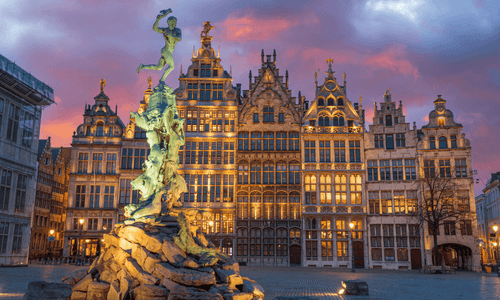
Nash Squared continues global expansion with the launch of its talent solutions business for the mid-market in Belgium
Nash Squared launches Flexhuis in Belgium, elevating it to a key player in the provision of MSP and RPO solutions for medium sized businesses in the Benelux market. Following the acquisition of Netherlands-based Het Flexhuis in July 2022 and subsequent rebrand to Flexhuis in February 2023, Nash Squared the leading global provider of technology and talent solutions, has launched this business model in Belgium, elevating it to a key player in the provision of MSP and RPO solutions in the Benelux market. This expansion into Belgium is another step towards Nash Squared achieving its aim of becoming a global player in mid-market MSP and RPO, building on its significant presence in the UK and the Netherlands. With over 30 years of experience, Flexhuis offers organisations the opportunity to radically simplify the complexities in the hiring, onboarding, and workforce management processes, allowing businesses to quickly connect with skilled talent to drive their businesses forward. Commenting on the launch of Flexhuis in Belgium Bev White, CEO of Nash Squared said: “Nash Squared already have a strong presence in the Belgium market through our Harvey Nash and Talent-IT Group brands, and with proximity to the Netherlands we see this as a natural next step in the growth and expansion of our Flexhuis brand. The use of contingent labour in Belgium has increased by 25% recently and through the Flexhuis offering we will help these organisations to transform the way they recruit and manage this talent.” Frederieke Schmidt Crans, Director of Flexhuis said: “I am delighted to launch the Flexhuis brand in Belgium. It is an exciting and evolving market with significant opportunity for our services as businesses continue to invest in their recruitment processes due to ongoing talent shortages and an increased reliance on contingent labour. Our mission is to simplify the way organisations recruit and manage talent by creating a world-class MSP solution with people and process firmly at its core, and through the launch of Flexhuis in Belgium we have taken an important step to further realising this.” Ronny Lommelen and Jeroen Fries, Managing Directors of Belgium added: “Speaking with our clients on their talent needs we already see huge demand for the solutions Flexhuis offers as organisations look at how they attract, recruit, onboard and organise talent. Through the Flexhuis brand we will be able to provide expert support and solutions that enable them to do this effectively and efficiently, saving them time and money whilst ensuring they build strong talent pipelines for future success.” -ENDS- About Flexhuis Flexhuis is a total talent solutions partner with a proven track record as a managed service provider (MSP) and recruitment process outsourcing (RPO) partner in the mid-market. We work with our clients to deliver best in class solutions which take workforce management to the next level for organisations around the world. We are part of Nash Squared, and have access to the reach, resources and talent trend insights that comes from a global technology and talent provider. For further information visit www.flexhuisglobal.com/be About Nash Squared Nash Squared are the leading global provider of technology and talent solutions. We’re equipped with a unique network, that realises the potential where people and technology meet. For over three decades we’ve been helping clients solve broad and complex problems, building and transforming their technology and digital capability. www.nashsquared.com
Research & Whitepapers

Foreign power activity raises the cyber stakes for digital leaders
Nash Squared CISO, Jim Tiller, looks at the impact of global unrest on organisation's cybersecurity. For all its complexity, the simple reality is that information security is just like any other market – driven by demand and supply. Demand comes from attackers, while supply comes from the availability of systems to attack. This year’s Nash Squared Digital Leadership Report shows us that both demand and supply are significantly increasing. We are seeing more cyberattacks, spiked by global unrest, and more systems available for targeting through an increasingly connected world. So it is that our research finds that, globally, the proportion of businesses suffering a major attack has risen to 28% this year (from 24% in 2021) and stands at 51% amongst large organisations (those with tech budgets over $250m). This reverses a trend of mild decline in reported major incidents in the previous few years. However, we should probably treat these statistics with a degree of caution. As the business community has become more conditioned to the cyber phenomenon, so the threshold for what constitutes a ‘major’ attack has risen. What might have been seen as almost a black swan event a decade or so ago now passes for a ‘normal’ cyber incursion. There’s little doubt that the frequency and sophistication of attacks is increasing all the time. Foreign powers waging the battle What really stands out in this year’s research is that, with the global unrest we’ve been seeing in 2022, and the ongoing politicisation of cyber warfare, the threat of a foreign power sponsored cyberattack has rocketed up the agenda for digital leaders, with 40% fearing the possibility compared to just 12% in 2018. This may partly be a function of increasing awareness – the more that nation state attacks or sponsored attacks are publicised and discussed, the more business leaders are conscious of the threat – but it’s also because they are becoming more widespread. There’s no doubt that certain nations are becoming increasingly active, determined and malicious in their cyber warfare efforts. They’re using both their own direct resources to carry out attacks, and sponsoring sophisticated crime syndicates to conduct them on their behalf. These criminals may also carry out further attacks of their own for their own purposes, increasing the jeopardy. Whereas a foreign power sponsored attack will have the chief aim of extracting intelligence or disrupting services and systems in rival countries, a criminal gang’s own efforts will be concentrated on breaching a system or extracting data so that a ransom can be extorted, usually payable in a cryptocurrency. What we also see is that the fear of a foreign power attack rises the larger an organisation is – peaking at 56% of digital leaders at large organisations. Targeting large organisations makes sense because of their reach across financial systems, essential communications, emergency services, critical products and solutions, and greater investments in research and innovation. Large organisations are a more attractive target to cyber criminals because they have a bigger attack surface, creating more potential entry points; they tend to be more important in their sector, making them a more attractive target to malicious actors; and they also have more intellectual property (IP) that attackers want to steal. As businesses continue on their digital transformation journeys, this IP is no longer held on paper in a safe, but resides on servers and digital systems. Cloud formations becoming complex On top of this, there’s an additional factor that is complicating cyber security and making the task of protecting the perimeters harder. That’s the cloud. Over four in ten (41%) respondents say that the move to the cloud has made security more complicated. On the face of it, this may seem surprising because through the big cloud providers such as Microsoft, Amazon and Google, businesses get access to enterprise-class security capabilities. However, the cloud is an exceptionally complicated environment from a technical perspective, with multiple protocols, processes and modules, and complex interactions between them. There is a risk of organisations making errors in configurations, especially if they have several different cloud providers across a mix of virtual, hybrid and physical servers and multiple countries/regions. Cloud is still an emerging capability and it is evolving all the time – the talent pool of professionals who really understand the security configurations and permutations and keep that knowledge refreshed is limited. This scarcity is of course compounded by the cybersecurity skills shortages we hear about so often. The result is that, for all the flexibility and resilience it creates, the cloud also brings security complexities, especially for large distributed organisations. Stay focused and avoid distractions So, what should digital leaders be concentrating on to keep their organisation safe and secure? With so many threats and risks from every direction, my main message here is to keep your focus. Carry out a rigorous, business-aligned risk assessment and devote your resources to dealing with the threats that highlights. Make use of the resources available to you. For example, the quality of today’s threat intelligence is unprecedented. Combined with such tools as the MITRE ATT&CK framework, it is now possible to prioritise based on threat modus operandi as they relate to your business conditions. Moreover, with digital transformation comes new capabilities to better locate and classify assets, ensuring that security is aligned to what matters. Conversely, it is easy to get distracted. I often see organisations rushing to buy multiple cyber defence tools – the ‘latest gadgets’ – which they then don’t even fully deploy or configure properly. It can turn into a blizzard of activity that just builds up security tech debt and achieves little. It’s also essential to get the basics right. For example, many successful ransomware attacks are simply the result of poor password management and authentication processes. If you’re going to focus on one area, that’s probably where to start. Invest also in educating your staff. Sound security practices by your people is one of the most effective cyber defences of all. The war is escalating – but the mechanisms and tools are out there to keep yourself defended. Review your risks, prioritise your actions, keep your focus and carry on moving along that path.
Latest news
Harvey Nash launches its first global Contractor of the Year Award.
Harvey Nash, the leading technology recruitment business has launched its first global Contractor of the Year Award. Working with over 11,000 active contractors each year, the award will recognise the value these individuals deliver to businesses and economies across the world, using their skills and experience to deliver vital projects for organisations. Nominations will be sourced from existing Harvey Nash clients across the UK, USA, Belgium, the Netherlands, Germany, Switzerland, Poland and Australia. A judging panel comprised of global clients and the Harvey Nash leadership team will evaluate each nomination against a core set of criteria, which includes the values the demonstrate and the positive impact they make, to create a shortlist before local winners are announced. Each local country winner will then enter into the Global Award with the overall Harvey Nash Global Contractor of the Year being announced in early 2023. Commenting on the launch of the Global Harvey Nash Contractor of the Year Award, Bev White CEO of Nash Squared, Harvey Nash’s parent company said: “I’m really proud of this initiative. It is a fantastic opportunity for us to shine the spotlight on our talented contractors who play a key role in the success of our clients and Harvey Nash. The power of saying thank you cannot be underestimated, and this award provides us and our clients with the opportunity to do just that.” Ronny Lommelen - Managing Director Harvey Nash Belgium: "We have always put people at the centre of what we do. This is true for our employees but absolutely for our fantastic group of talented professional contractors as well who are so valuable for our clients and Harvey Nash. The Harvey Nash Contractor of the Year award provides puts our contractors on the podium they so very much deserve". For more information about the Harvey Nash Contractor of the Year award please contact Rachel.Watts@HarveyNash.com
Insights

Effective Recruitment In A Competitive World: Do you really know what candidates want?
Talent demand in the technology sector is not just high, it is set to remain a severe challenge – even in the face of recession. Earlier this year BCS, the Chartered Institute for IT said it had recorded 64,000 vacancies for UK tech jobs in the third quarter of last year alone [https://interact.bcs.org/pdfs/bcs-state-nation-report-2022.pdf], a figure that was up by 191% on the same period the year before. Added to this, Nash Squared’s recently launched Digital Leadership Report [https://www.nashsquared.com/dlr-2022] found that 68% of digital leaders in the UK thought that the skills shortage was preventing them from keeping up with the pace of change in their organisation. More worrying, 57% think that UK organisations will never have enough technology staff. And yet in this high-pressure environment some organisations are missing out on tech talent unnecessarily. The problem? They don’t know what their candidates want. This issue was highlighted by a recent LinkedIn poll run by Harvey Nash [https://www.linkedin.com/posts/harvey-nash_newjob-harveynash-technologyrecruitment-activity-6980925879409352704-sfPk?utm_source=share&utm_medium=member_desktop]. Technology professionals were asked to name their most important consideration when thinking about a new role. While 40% cited salary, this was swiftly followed by approach to flexible working at 30% and career development/progression at 26%. Some of these priorities appeared in The Harvey Nash 2021 Technology and Talent study [https://www.nashsquared.com/techandtalentstudy]. On that occasion remuneration scored 60%, work location/remote work opportunities 43% and strong culture/leadership 40%. Even from this it is evident that the balance between what aspects of work candidates value is shifting. Now more than ever employers wanting to attract and retain technology talent need to understand these trends and act accordingly. Of course, salary remains important – and will continue to do so in the teeth of a cost-of-living crisis – but competing on this factor alone is unsustainable. Employers cannot afford to ramp up renumeration levels indefinitely. What they need to do now is look at what others levers they can pull to give them greater appeal. How to stand out Candidates now have a wide choice of prospective employers. They will often be in multiple application processes at any one time. Responses alongside the LinkedIn poll shed light on how candidates now differentiate between employment opportunities. One respondent suggested that the overall employment package is now more important than any single feature within it. At the same time other participants suggested they needed “the opportunity to make a change” or simply “respect”. Without a doubt, employees want work that satisfies them. As Gartner and many others have pointed out, the pandemic and ‘the Great Resignation’ has made this even more important (although it is worth noting no one has said salary is no longer important at all) [https://www.gartner.com/en/articles/great-resignation-or-not-money-won-t-fix-all-your-talent-problems]. Happy employees – employees who stay with an organisation – do so because they feel their values and motivations are aligned to those of their employer. Essentially, the organisation’s mission, values and culture match their own. But while knowing what your candidates want is one thing, making sure that they – and your existing employees – know what you can deliver is another challenge altogether. Mastering today’s talent pools means ensuring your communication channels are open, effective and two-way. Transparency works Firstly, throughout the attraction and appointment process candidates must be very clear on what the job entails and what their reward will be. Employers need to give transparency in terms of what working for their organisation means, what the day-to-day experience will be, the expectations and the rewards. If the reality doesn’t match the promise the candidate is likely to make a swift exit. This is not just bad as far as that particular appointment goes but it risks reputational damage for the employer. One bad experience shared could put off a number of potential candidates, reducing the organisation’s talent pool significantly. The key here is communication. The organisation needs to ensure everyone is aware of the benefits available to them, the opportunities and the development resources they can access and how they can be accessed. This is equally important to tech professionals who can sometimes feel overlooked or pigeon-holed. By making these communications two-way [https://cpdonline.co.uk/knowledge-base/business/employee-retention/#why-do-people-leave-organisations] the organisation can identify candidates and employees for whom the reality isn’t living up to expectation and act to correct this as soon as possible. Matching candidate desires to business offering has always been critical to securing talent, but companies looking to attract tech talent must be wary of bending themselves out of shape in order to impress candidates. Understanding what candidates want and being honest about what you can offer will make for the long-term recruitment of valuable talent. Making promises that can’t be fulfilled will lead to retention issues and a bad reputation among the talented candidates you badly need. Candidates will sometimes compromise on salary [https://employeebenefits.co.uk/28-employees-reduce-salary-flexible-working/] if other aspects of the role and company align with their requirements. Given this, understanding what your candidates want and ensuring you clearly highlight those aspects will give you the leading edge in the talent market. Doing so will not just differentiate yourself from the competition - it may even reduce the need to meet ever-spiraling salaries. What do we mean by one day they'll beat the competition. Do say 'Employers cannot afford to ramp up renumeration levels indefinitely, they need to look at what others levers they can pull to make their business stand out. Candidates will sometimes compromise on salary if other aspects of the role and company align with theirs. This means understanding your candidates first and foremost and ensuring you clearly highlight the aspects now as important to them. Doing so will help you differentiate yourself - and may even help you avoid the current salary (need a word).
Latest news

Nash Squared CEO, Bev White, named in Global Top Women in Staffing List
London, November 16 2022 – Bev White, CEO of the leading global talent and technology solutions provider Nash Squared, has been recognised in Staffing Industry Analysts (SIA) Global Power 150 – Women in Staffing 2022 List. In its eighth year, the list highlights 100 women from the Americas and 50 globally, including Bev, who have made significant contributions to the success of their companies and the global talent sector. This is Bev’s second time featuring on the list since she joined Nash Squared in 2020. Bev White began her career in technology following a degree in computer science. After roles as CIO and other IT leadership positions at Schlumberger and NTL (which became Virgin Media), White moved into recruitment and talent with various leadership roles before joining Gi Group as CEO in the UK and Ireland. In February 2020, she joined Nash Squared as CEO. Bev White said of her inclusion on The Global Power 150 – Women in Staffing list: “I’m delighted to have been included in this list, and for Nash Squared to be recognised in this way. Nash Squared occupy a very special place in the world. We have such an impact on people’s lives and careers, and the organisations and communities we work with. It’s a responsibility we take very seriously.” Find out more about SIA’s Global Power 150 – Women in Staffing 2022 list: http://si100women.staffingindustry.com/.
Latest news

Harvey Nash’s parent company Nash Squared becomes a major force in Managed Service Provision
Nash Squared, the leading global provider of talent and technology solutions and parent company to Harvey Nash, has acquired Het Flexhuis, a major Managed Service Provider (MSP) of talent and recruitment services. Het Flexhuis, headquartered in The Netherlands, has built a strong track record delivering outsourced recruitment services for government, public services as well as commercial organisations. It provides a single point of contact for clients, managing the entire end-to-end recruitment process, from planning and anticipating hiring needs through to sourcing, selecting and onboarding candidates, as well as running existing workforces. Read the full release on Nash Squared’s website.
Latest news

20,000 calories and 38,000 km later, Harvey Nash Belgium celebrate the end of the Nash Squared World Games with charity donation
Monday 27th June – Nash Squared, parent company to Harvey Nash Belgium celebrated the end of their annual World Games competition and announced the winning team - congratulations to Harvey Nash USA! The Nash Squared World Games sees employees and friends of the business - which includes the Harvey Nash, NashTech, Crimson, Spinks and Talent-IT brands - track their exercise activity through the GoJoe social fitness app. Read the full release on Nash Squared’s website.
Latest news

Calling all contractors, friends & partners - Join the Nash Squared World Games
Harvey Nash Belgium is excited to invite our contractors, friends, clients and partners to take part in the annual World Games of our parent company Nash Squared. What’s it all about? Between June 6-24 hundreds of people across Nash Squared as well as its global community of friends (contractors, clients and partners) will be battling it out in a free team-based movement challenge on the GoJoe social fitness app, to see who can cover the most kilometres across runs, walks, cycles, swims, yoga moves, HIIT and much more. Who can cover the most distance? We have created country specific teams for our valued friends, who will compete alongside Nash Squared’s internal teams. Whichever country wins, Nash Squared will make a donation to a local charity. Here are the Friends teams: Belgium BE - Friends/Contractors Germany DE - Friends/Contractors Netherlands NL - Friends/Contractors UK UK - Friends/Contractors USA US - Friends/Contractors Meaningful movement GoJoe is all about meaningful movement. It doesn’t matter if you are a dog walker or serious athlete, we want people to get out of the house clocking up as many km as possible on their app, as they walk, run, swim, bike, yoga, HIIT, ski or weightlift their way through June. This year we are being supported by the Nash Squared Wellbeing Hub which will bring you tips, activities and encouragement about how to get the best from the Games. It’s a fantastic resource for us all! Activities are weighted so that kilometres covered convert to points – meaning that those on two-wheels won’t automatically score the most points! We will be comparing teams by various measures, including average distance per team member. Join the movement Find out more and sign up at: www.gojoe.com/nashsquared Good luck and email help@gojoe.com if you need assistance! #NashSquaredWorldGames #ReadySetGoJoe

What is The State of Digital right now? Join us online on 30th June to find out
Broadcasting live from the rooftop terrace of Nash Squared’s new HQ in London, we’re inviting you to join us for this online event where we’ll be joined by a panel of industry experts as we announce five statements about the state of our technology sector. This event is part of a series where we dive deeper into the findings and insights from the Nash Squared (formerly Harvey Nash Group) Digital Leadership Report. We’ll be dissecting everything from security and transformation, to leadership and inclusion. If that hasn’t whetted your appetite enough, watch our preview video and remind yourself of our most recent Digital Leadership Report event from last November. We hope this event will help you understand how these topics impact your business and your career, as well as offer some guidance on how to navigate them. If you’d like to join us on Thursday 30th June at 4pm BST, register now!
Insights

Following the customer. How we can learn a thing or two from Alphabet and Meta
Bev White, CEO of Nash Squared, looks to the future of today's organisations and platform business. It’s a staggering fact that up to half of the world’s largest companies will not exist in ten years. Driven by digital, the world is moving at an increasing rate, and even if a company is highly profitable and successful right now, if it stays still, the chances are that customers will find other products, services or technologies that can satisfy their needs in the future. This constantly changing focal point of how and where you can add value is now a permanent feature of the world. Big tech platform expansion The provision of a portfolio of products and services that can meet the changing needs of customers has been behind the remarkable growth of digital platform businesses – the tech giants like Meta and Alphabet. They both started out as one primary service (Facebook, Google) and then began to expand into other, related services, always with the view of keeping the customer central to what they do. It’s a model that can unlock significant opportunity and growth. For example, research from MIT Sloan found that digital platform companies were twice as profitable and were more than twice as valuable as their conventional counterparts. Following the customer This ability to ‘follow the customer’ and provide clients with relevant solutions across a connected portfolio of needs doesn’t need to be confined to ‘pure’ tech. It’s something we are adapting into our business model at Nash Squared – our new enterprise-wide brand name, launched today, for what was the Harvey Nash Group. Like Meta and Alphabet, businesses often start out with one primary service – in our case, technology recruitment (Harvey Nash). Altogether, there are now six Nash Squared businesses that are linked in what they do through the theme of technology. We can provide people, technology, or people to advise on technology. For businesses in or connected to the technology sector, having the agility and nimbleness to match services to customers’ changing needs is essential. Cyber security, for example, has become a major area of need that is hampered by acute skills shortages – so we have developed a virtual CISO practice in response. Through adopting this model and developing a platform of related services there is a greater opportunity for rapid growth. This is why we have an ambitious plan to more than double our headcount over the next five years, from 2,500 to over 6,000 people. A culture of collaboration Most important of all is to build a common culture and purpose amongst your teams, that is founded on collaboration in the interests of the customer. That culture comes through a myriad of things: communication from the top, good line management, and operational (and social) interaction. When staff feel that they belong to one uniting organisation then teamwork and collaboration will naturally build between the component parts. The point you want to get to is where team members are not asking themselves, “How can I sell more of X to client Y?” but rather, “What issues and challenges is client Y trying to solve – and how can we help them from across the services in our businesses?” Collaboration between business teams – workshopping, brainstorming, activity planning – can then bring the best of each service line to create solutions really focused on individual clients. More than the sum of the parts A business that has a culture aligned to its clients’ needs and that can bring the power of its different brands into play to help meet them will achieve more success and grow faster than a mono-line organisation centred around just one capability. I believe that this is one of the secrets behind the growth of the giant tech platforms. They know that when you work together to solve things, the power is exponentially higher. That is certainly our aim. Whatever specific line your business is in, think about what ‘following the customer’ means for you. What are your customers’ lifecycles, what needs do they have and at what different stages – and how are you innovating to service those? Develop a portfolio that can flex and adapt to meet customer needs, and strengthen the coherence of your offerings by building collaborative work patterns amongst your teams. You may never achieve the extraordinary market penetration of an Alphabet or a Meta, but you could propel your business on a faster trajectory of growth. Welcome to a growing trend of the future – leaving (and continuing) from a platform near you.
Latest news

Harvey Nash Group becomes Nash Squared as it signals its intentions to double global headcount to over 6,000
Harvey Nash Group, parent company to Harvey Nash Belgium, is being renamed to Nash Squared. This comes as the company signals its intentions for rapid growth - which will see its global headcount more than double from 2,500 to over 6,000 during the next five years. The company has continued to grow strongly during the pandemic with a number of strategic moves including the acquisition of technology recruitment business, Latitude 36, to become a major force in the US technology recruitment market, the continued global expansion of its technology solutions business, NashTech, with the opening of its third Vietnam office in Danang, and the launch of new offshore development centres in Latin America dedicated to clients based in North & South America. The move to Nash Squared positions the company as an integrated technology and talent provider, allowing clients to build and transform their technology capability in numerous ways. Becoming Nash Squared also: Firmly positions the company to place the customer at the centre of everything it does - allowing Nash Squared to talk to all clients, from any of its six group brands, about all its services and global capability. Makes a very clear distinction between Nash Squared and Harvey Nash, the company’s global technology talent acquisition brand. With significant growth plans for the business this name change removes any confusion about what the Harvey Nash business does and Nash Squared’s overall purpose. Bev White, CEO of Nash Squared said: “The future for our clients lies in helping them build and transform their digital teams and capability in limitless ways, and the Nash Squared brand positions us strongly as a platform to deliver on this. It also supports our significant growth plans; as we expect to more than double our global headcount from 2,500 to over 6,000 over the next five years.” Bev White continued: “It was very important to retain the Nash name in the group brand as it is a uniting factor to so much of what we do. In fact, many parts of the group call themselves Nashers! Becoming Nash Squared reflects the impact we see when our businesses work together. We are an incredible company that is even more powerful when we collaborate, and Nash Squared is the brand that will take us even further.” At the start of this year the company’s UK headquarters moved from 110 Bishopsgate to LDN:W, 3 Noble Street to play a major role in Nash Squared’s vision for a flexible, collaborative work environment. The new digital enhanced space also reinforces the company’s investment in people. -ENDS- Media Contacts: David Pippett, ProServ PRdavid@proservpr.com+44 (0) 7899 798197‍ Nash Squared Nash Squared are the leading global provider of talent and technology solutions. We’re equipped with a unique network, that realises the potential where people and technology meet. For over three decades we’ve been helping clients solve broad and complex problems, building and transforming their technology and digital capability. www.nashsquared.com‍ Notes to editors: Nash Squared is the overall company brand for the following six market leading technology and talent businesses - Harvey Nash, NashTech, Alumni, Crimson, Spinks and Talent-IT. Although the company brand has changed to Nash Squared, each of these businesses will retain their present brand names.
Insights

Digital begins in the boardroom
Magnus Tegborg, CEO, and Catharina Mannerfelt, Partner at Alumni, part of the Harvey Nash Group, discuss the impact of having a digitally savvy board. This article first appeared on ComputerWeekly.com. Successful organisations need a digitally savvy board to shape their business agenda What does it mean for a business to be truly digital? It’s a concept that’s easy to talk about, but difficult to define. But one thing that unites all the successful digital businesses we see is that the board is driving the technology agenda. There is a culture of digital awareness and prioritisation that starts at the top and feeds down. Whether an organisation is highly digitised because of the nature of its business, or whether technology plays more of a supporting and enabling role, successful strategies depend on having a digitally savvy board that leads and shapes the agenda. The fact is that most board members do not have technology backgrounds and may not regard themselves as digitally well-equipped. Harvey Nash Group research with the London Business School conducted in 2019 found that many board members lacked confidence around their digital awareness and abilities. While digital innovation had risen towards the top of board agendas, less than half believed they had the right skills to drive digital transformation. In the intervening period since then, a lot has changed – mainly through the effects of the pandemic. Covid naturally shifted businesses towards more digitally based strategies. It also changed how both leadership and staff work. Everyone has become more accustomed to using online platforms such as Teams and Zoom and to collaborating and interacting more digitally. So it is likely that if we ran the research again now, confidence would have increased. Nevertheless, from our interactions with executives and non-executives, digital remains an area of some insecurity for many. It would be a brave board member who said they were completely in command of digital. In our view, while no board or individual will ever be completely in control of what is naturally a fast-moving and disruptive force, there are a number of key elements for success. Digital for everyone Firstly, digital needs to become a built-in part of how the board – and, by extension, the business itself – thinks and operates. There must be a focus on ensuring that digital is integrated and infused into every aspect of the organisation’s strategy, rather than being a separate add-on. “Turn to page 18 to see the digital section of our strategy” would be a sign that a business was most likely taking the wrong approach. Secondly, digital is something that everyone on the board needs to have an awareness of. They may not all be technical experts, but they should all understand the importance and relevance of the digital agenda and how it applies to their business. This leads us to another key point. There is a perennial debate about which figure(s) should be on the board – the CIO, the CTO, the CDO, etc. It will vary from organisation to organisation and partly depends on personality. It is probably the case that nearly every business needs someone on the board who “represents” technology. In most cases, that is still likely to be the CIO. Broad generalists, not narrow experts However, boards need to guard against the default of having a “technology expert” that everyone turns to whenever a digital-related issue comes onto the agenda. Rather than being a collection of individual experts, everyone on a board should have a good strategic understanding of all important areas of business – finance, sales and marketing, customer, supply chain, digital. The best boards are a group of generalists – each with certain specialisms – who can discuss issues widely and interactively, not a series of experts who take the floor in turn while everyone else listens passively. There is much that can be done to raise levels of digital awareness among executives and non-executives. Training courses, webinars, self-learning online – all these should be on the agenda. But one of the most effective ways is having experts, whether internal or external, come to board meetings to run insight sessions on key topics. For some specialist committees, such as the audit and/or risk committees, bringing in outside consultants – on cyber security, for example – is another important feature. Digital as another form of disruption All businesses are looking to bolster the digital savviness of their leadership teams and competition for the best talent is fierce. We have found that it helps to think more broadly about who the board is looking for. It doesn’t have to be a formal technologist. Digital is really another pervasive form of disruption. Someone who has experience in guiding an organisation through any significant form of disruption or transformation – commercial, operational, regulatory – is likely to have a skillset that is in tune with the digital paradigm. An innovation mindset across the business One of the great prizes of a digitally aware board is that it creates the conditions to seed a digital culture throughout the organisation and encourage a mindset of innovation and new ideas. For this, boards must obviously ensure that sufficient funding is in place, such as by investing in R&D. It is also key to recognise individuals and teams who are doing great things. Spotlighting achievements can have a powerful galvanising effect. Boards need to recognise that the job is never done. The technology agenda is constantly moving on and digital approaches are being used in ever more innovative ways. It is a continual process of keeping pace – and, indeed, looking for ways to get ahead and be the disruptor that everyone wants to be.
Latest news

Harvey Nash Group launch a free to all wellbeing hub
Join in our classes, read great advice. From Yoga videos to fitness workouts, meditation classes to nutrition advice, and much more. Harvey Nash Group knows a thing or two about work – we been providing tech and talent solutions to some of the world’s leading and most innovative organisations for over three decades. But we also know work isn’t every everything. In fact, work only works when it’s balanced with other aspects of life. That’s why we launched our Wellbeing Hub, benefitting everyone connected with Harvey Nash Group – employees, clients, contractors, candidates, contacts. From yoga videos to fitness workouts, meditation classes to nutrition advice, the Harvey Nash Group Wellbeing Hub is available for anyone who cares about their health. And that’s just about everyone! Right now you can: Enjoy (if that’s quite the word) a 25 minute HIIT class from Mark Boateng View an introduction to mindfulness, and spend 10 blissful minutes in meditation from Alex Bannard Read tips on getting better sleep Learn how to how to stop feeling like an ‘imposter’ …and lots, lots more Starting small, but perfectly formed, the content will grow over time. Head over to wellbeing.nashsquared.com, sign up for our updates to keep posted as our content grows, and start your wellbeing journey.
Insights

The rise of technology in recruitment: security and privacy friend or foe?
Jim Tiller, Global CISO, and Ben Shepherd, Data Protection Director, Harvey Nash Group outline the key challenges for information security in the recruitment sector. This article first appeared in the March edition of Global Recruiter's Compliance Report 2022 on page 22. It was a trend already in motion, but one the pandemic has hugely accelerated: technology is in use everywhere within the recruitment industry. Discussions, interviews and profiling with clients and candidates; internal communication and collaboration; the storage and processing of huge amounts of data – all of these are increasingly conducted through technology platforms and hosted in the cloud. Without doubt, this unlocks significant efficiencies and enables recruiters to become more agile, responsive and fleet of foot. But what of the security and data privacy implications and risks, and how should these be managed? Security in a cyber world Firstly, security. No one really needs reminding that cyber attacks are almost endemic. In the 2021 Harvey Nash Group Digital Leadership Report, a quarter of tech leaders said their organisation had suffered a major IT security incident or cyber attack in the previous two years. This has edged down slightly – a sign perhaps of the rising investments being made. But attacks remain almost a fact of life. It has become increasingly easy for cyber criminals, hacktivists and others to deploy sophisticated tools to infiltrate systems, deny service or embed ransomware. And the goalposts have shifted: whereas in the past, the main targets were financial organisations and others whose business was money, now data has become the new oil. In the digital age, all businesses hold data. As a result, no organisation can be complacent about cyber security. With so much confidential information circulating in their systems, recruitment firms must be continually vigilant. This need has been heightened by the growing shift to digitisation. Things that may previously have been discussed verbally in the office are now more likely to be communicated in an electronic message. Face to face interviews are likely to take place over Teams/Zoom or via a virtual interviewing platform instead. And massively more data is held in the cloud. In many respects, it’s simply a case of getting the basics right. Simplify and standardise your systems where possible: complexity is security’s nemesis. Test your systems, check your firewalls, make sure updates and patches are promptly applied. Ensure communications are encrypted. Make sure your identity and access/authorisation controls are rigorous and up to date. In some senses, the task is becoming easier because with the migration to the cloud, most of us now have access to the security capabilities and provisions of the tech giants like Amazon, Microsoft and Google – and their controls will at times exceed what some organisations currently have in place. Of course, the critically important aspect is knowing how to take advantage of those security features. Over time, optionality and user choices may become more limited – but the specification and security of solutions will be continually enhanced too. Nevertheless, no one can afford to rest on their laurels. The risks and the potential damage to reputation are simply too high. You need to work tirelessly at maintaining and enhancing the cyber resilience of everything you do. Data privacy a pre-requisite Then there is data privacy. It’s another hot topic that’s become especially prevalent in the digital age. We are all, as business users and consumers, more aware of how our data is used and shared. And again, with so many more communications and discussions taking place electronically and remotely now rather than face-to-face, the risk rises with it of inappropriate data sharing or unwitting breaches of confidentiality. That’s why you need very clear protocols that are understood by all. Obviously, we can’t go far here without mentioning the GDPR. As an organisation, you need to be clear in all cases what your lawful basis is for data collection and processing – whether that’s consent or another basis under GDPR such as legitimate interests. And whether it’s data retention, fair processing, privacy notices, subject access requests or maintaining records, it’s simply a pre-requisite to ensure that everything is compliant with your regulatory obligations. Embedding security and privacy in the culture But of course, having the right policies and data architecture in place is one thing – making sure that staff on the ground (and, increasingly, on their own at home these days) understand the rules and follow them is another. That’s why a programme of training, support and guidance is essential, across both privacy and security. At Harvey Nash Group, we have mandatory annual training that applies to all staff, right up to the CEO. We have a set of company rules on security and privacy that is communicated to everyone as well as a foundational set of privacy principles for staff to follow. It’s often said that ‘culture eats strategy for breakfast’ – that’s especially true in this area. The best and most effective way to ensure that people are mindful of security and follow data sharing rules is to embed it into the prevailing culture of the business. Encourage team leaders and line managers to include it regularly in conversations with their teams, formal and informal. Those ‘water cooler’ moments can be especially impactful. For example, a simple reminder: Don’t put anything in an email that you wouldn’t want to see in the press tomorrow. Emerging issues of the future The growing digitisation of recruitment is also raising new issues that businesses need to tackle. One of these is that the hybrid and remote working era means candidates from a much wider geographical area may apply for a role. Clients are aware of this too and some are expanding the perimeters of their search. In our Digital Leadership Report, over a third of digital leaders said they have widened the geographical net. This means that recruitment firms are increasingly likely to be interacting with individuals based in potentially less familiar overseas jurisdictions – so following the right data protection rules is essential. If you use the GDPR as the ‘gold standard’ and base policy on that, you are unlikely to go far wrong. Nevertheless, some changes may need to be made. For example, in the US, California has specific rules around individuals’ data rights. We have an office there, and so needed to update the web pages of our US site with required disclaimers. Other issues are more conceptual – and may need collective discussion and debate as an industry to chart the way forward. Primarily, these revolve around the growing automation of profiling, screening and even job-offering to candidates. With increasingly sophisticated algorithms available, it may become possible to conduct almost a complete recruitment process through machine intelligence. This type of advance in technology may clash with data subject rights under the GDPR. Clearly, good recruiters will always ensure that their talented people make the ultimate decisions and recommendations to clients. But, as the technology develops, where will the line be drawn over what degree of autonomous AI decision-making is acceptable? It’s certainly one to watch. A dynamic balance Recruitment has always been a dynamic industry and the sector is living up to its reputation through its rapid and successful embracing of technology. Nevertheless, this brings some challenges that have to be carefully managed. At Harvey Nash Group, we’re huge advocates for the benefits of digitisation – but equally, we continually monitor, measure and test it to ensure it’s generating the outcomes desired.
Latest news

Harvey Nash Group host International Women’s Day Virtual Conference on Tuesday 8th March 2022
To celebrate International Women’s Day on Tuesday 8th March, Harvey Nash Group are hosting their first ever Virtual Conference, which supports this year’s theme - #BreakTheBias. The conference has a full line up of brilliant speakers from both within the Group and from its clients, partners and connections. Although the conference is scheduled from 9am GMT to 6pm GMT, you can select which particular sessions you’d like to join. The full schedule for the day is featured below. Highlights include a panel discussing modern parenting, the importance of male allyship and a meditation session, so you can recover your balance. GMT Session 9am #MeToo - an Indian Context Geeta Goti discusses sexual harrassment in India, in conversation with Chantelle Jones. 10am Modern Parenting Panel Discussion Work, home, family, childcare, personal time - it's a delicate balancing act! Elli Fruehwirth hosts a panel of Harvey Nash Group colleagues and clients. 12pm Women in Technology Panel Discussion In this panel discussion, hosted by David Savage, we'll be looking at how to attract women to the technology sector and what schools, parents and business need to do. 1pm Meditation Session ... and breathe. Join Elli as she takes us through a relaxing, restorative guided meditation. 2pm You Have a Voice, Here's How to Amplify It to Advance Your Career Melanie Hayes interviews Emmy award-winning former CNN correspondent and anchor Gina London, who guides the world's top companies and executives on how to connect and engage with their employees, their board and themselves more positively. 4pm The Importance of Male Allyship Panel Discussion Stephanie Melodia hosts a panel discussion of Harvey Nash Group employees and contacts on why every person plays an important role to enable sustainable change. 5pm Journey to CEO - Leadership Lessons Harvey Nash Group CEO, Bev White, shares lessons she's learnt throughout her journey to becoming a CEO. With Melanie Hayes and Occo Lijding. To register for the conference, please click here
Latest news

Harvey Nash Group pledge to use renewable energy in European offices by 2023 on the way to achieve Net Zero
London, February 9th - Harvey Nash Group, the leading global provider of talent and technology solutions, publish their Sustainability Report today, which includes details of how they will achieve Net Zero by 2050. The first steps on the journey to Net Zero will be to make sure European offices are powered by renewable energy by 2023, a 50 per cent reduction in air travel globally by 2025, as well as working with suppliers to reduce carbon footprint in the wider supply chain. As part of the Sustainability Report, the Group have also shared their plans for having a positive social impact, which includes supporting mental health initiatives and focusing on diversity and inclusion. The Group has already made progress in this area with the launch of the Wellbeing Hub, an open to all portal for health and wellbeing and the Inclusion Passport, to support employees who may need workplace adjustments due to a health condition, disability or another personal situation without having to have a difficult conversation multiple times if they change line manager or department. Harvey Nash Group Chief Executive Bev White commented: “There’s no doubt we have an impact on people’s lives and careers, and the organisations and communities we work with. And it’s a responsibility we take very seriously. Our vision is to build limitless futures. We believe our goals for environment, sustainability and governance are key to achieving this.” The use of renewable energy in the tech sector is of utmost importance. For more on the Group’s viewpoint on this, please read Chief Financial Officer, Chris Tilley’s most recent article www.harveynashgroup.com/sustainability on this very thing. To download the full report, please visit www.harveynashgroup.com/sustainability. About Harvey Nash Group Harvey Nash Group are the leading global provider of talent and technology solutions. We’re equipped with a unique network, that realises the potential where people and technology meet. For over three decades we’ve been helping clients solve broad and complex problems, building and scaling their technology and digital capability. www.harveynashgroup.com Follow us on LinkedIn at https://www.linkedin.com/company/harvey-nash-group/
Insights

2022 must be a big year for sustainability in the tech sector
Chris Tilley, CFO, Harvey Nash Group As we enter 2022, and the first few locations across the world show signs that the pandemic might be easing, many organisations have an opportunity to refocus on core strategic goals and aims. For the tech sector this year (and beyond), one of these must be sustainability. Without doubt, the climate agenda has intensified in recent times, culminating in the COP26 conference in Glasgow in November last year. Whether you see the conference as a success, a disappointment or somewhere in between, it cemented climate change and climate risk as a key issue for our times and increased the sense of urgency for action. That urgency will manifest itself in governments around the world forcing businesses towards more sustainable behaviour as well as more comprehensive and transparent reporting. And this will be complemented by increasing scrutiny and pressure from businesses’ key stakeholders – from shareholders, analysts and rating agencies to regulators, customers and staff. Tech with further to go The fact is that whilst many tech businesses, including especially the Silicon Valley giants, have put significant sustainability goals at the heart of their future vision, others are yet to make significant in-roads in the journey towards Net Zero. We saw evidence of this in last year’s Harvey Nash Group Digital Leadership Report – the sustainability agenda was second from bottom in Boards’ priorities for their technology teams. More than half of the digital leaders we surveyed say their businesses are using technology to reduce travel and improve operational efficiencies, which is encouraging – but less than a quarter are focused on improving the carbon footprint of technology itself. This needs to change – and I think it already is. Certainly the carbon and wider Environmental, Social & Governance (ESG) agenda is something that comes up more and more frequently in conversation with clients. It’s on tech leaders’ minds. More businesses are also appointing specific leads to drive the sustainability ambition, such as Sustainability Directors or Chief Sustainability Officers. On the journey at Harvey Nash Group It’s something that we are accelerating the pace of at Harvey Nash Group, too. We recognise that we’re in the early stages of our journey but we have already taken some significant steps. In the UK, we report on our sustainability and energy usage in the form of our SECR (Streamlined Energy and Carbon Reporting) report. We’ll also be reporting in line with the TCFD (Taskforce on Climate-related Financial Disclosures) framework as that comes on line for listed and large businesses in the UK this year. In addition, we have published a Carbon Reduction Plan in which we set out our approach and pathways to become Net Zero across the Group. We have set ourselves ambitious targets to become carbon net zero by 2030 across our operational footprint and by 2050 we will be net zero across our entire value chain. We’re going further too: today we publish our Sustainability Report which will give more detail and analysis of how we capture and define our current carbon footprint across the Group, the measures we’re putting place to reduce it, and our targets moving forward. This is not a mandated report – it’s entirely voluntary. We’re doing it because we know it matters to our stakeholders and we want to kick off an open and productive information flow that shares our vision and the progress we’re making. Scoping your footprint, prioritising actions What have we learned so far? Firstly, you can’t tackle an issue if you don’t know how big it is. So the key foundational step is to measure and quantify your Scope 1-3 carbon emissions. Undoubtedly, it’s quantifying and then tackling Scope 3 that is the biggest challenge, as this encompasses all indirect emissions across an organisation’s value chain. To compile our footprint, we put together a working group with representatives from every team and geography in the Group so that we could gather all the data needed. This group will remain key going forward as we track the difference that our measures are making. Secondly, prioritise actions that will have the biggest impact. For most technology businesses, energy consumption will be a significant driver of the carbon footprint. So ask yourself, how are you hosting your data? Worldwide, data centres are estimated to consume 200-terrawatt hours of electricity a year. Does your data centre provider run their facilities on renewable electricity? This is a critical piece in reducing IT-related carbon emissions. We have moved all our hosting across the Group to Microsoft Azure – as well as security and cost factors, Microsoft’s commitment to shifting to 100% renewable energy supply by 2025 was a key part of our decision. Then there are the suppliers of electricity and power for your offices and operations. At Harvey Nash Group, we’re beginning the process of switching to renewable energy providers across our businesses. With energy costs volatile and rising, severing the fossil fuel reliance and moving to sustainable sources makes good sense. Buy-in and communication Thirdly, sustainability has got to be a live issue at Board level. So whoever is taking the lead on sustainability in your organisation – whether it’s the CFO, COO, CIO or a sustainability specialist – they must have the ear and the buy-in of the Board to drive real change across the business.Finally, sustainability can’t be something that is siloed within one department. It’s got to be shared and communicated throughout the organisation. There has to be a real cultural commitment. That shouldn’t be hard, because it’s a topic that really matters to increasing numbers of people. Small measures can help boost this as well – for example, we have begun an initiative whereby we fund the planting of one square metre of seagrass (that is a superb absorber of carbon) for every new joiner to the Group. But making sure that everyone understands where you are on the journey and what’s coming next is more difficult to get to. So, have a clear plan and keep communicating it. Celebrate successes and keep the momentum going. The days when sustainability was an offshoot of the ‘CSR programme’ are gone. It’s now a critical strategic topic that matters to key stakeholders. The tech sector is recognising this and can make significant strides forward on the path to Net Zero.
Insights
Tech sector needs to increase its focus on supporting Net Zero ambitions
With the COP26 climate change meeting in Glasgow taking centre stage this month, global attention on the climate emergency is intensifying. There is little doubt that significant coordinated action is needed. The report in August from the United Nation’s Intergovernmental Panel on Climate Change (IPCC) warned starkly that the situation has become “code red for humanity”. Its assessment concluded that some effects of climate change such as continued sea level rise are irreversible at least for centuries – but if the world can reach Net Zero by the middle of the century, it is not too late to avoid the worst impacts of climate breakdown. It’s a global issue that, at the top level, requires international and national action if we are to address it. Governmental public policy and targeted regulatory interventions and incentives will be key drivers. A growing tech footprint But what of the picture at a sector level? More specifically, what about the technology sector and the actions that technology firms and IT functions can take to support decarbonisation efforts? It has been estimated that digital technologies account for 5.9% of global greenhouse emissions and that computing could have an even bigger impact on global warming than air travel. With the huge rise in video conferencing and streaming during the pandemic, and the accelerating pace of digitisation and technology transformation, reducing the carbon from tech must be a key priority. Demand for data and digital services is expected to continue its exponential growth over the coming years, with global internet traffic expected to double by 2022 to 4.2 zettabytes per year. And yet, Harvey Nash Group’s Digital Leaders Report – the world’s largest and longest running survey of senior technology decision makers – finds that the sustainability agenda languishes second from bottom on Boards’ priorities for their technology teams. More than half of digital leaders we surveyed say their businesses are using technology to reduce travel and improve operational efficiencies – but less than a quarter are focusing on improving the carbon footprint of technology itself. To an extent, reducing the carbon intensity of technology is out of most technology businesses’ hands – the hope must be that technological breakthroughs lead to computing hardware and software that simply require less power. If every laptop in the world ran on half the current electricity, for example, the global savings would be huge. Data centres under the spotlight However, we can’t ignore the problem and park it with someone else. One of the keys to tackling climate change is recognising that we all have a part to play. Small actions can build and create a large cumulative effect. One key area that every technology business and IT function can look at is data centres. Worldwide, data centres consume an estimated 200-terawatt hours of electricity per year. One simple solution could be to switch from data centres in locations where power generation is coal intensive, like India, to ones where the electrical grid runs on renewable power, such as Finland. This can reduce carbon emissions by a factor of between 10 and 100 times. So, digital leaders need to ask the question: what is the carbon footprint of the data centres we use? Do they run on renewable energy or are they powered from fossil fuels? Some of these may be proprietary data centres or server rooms. If that’s the case, the solution is likely to be in your own hands, investigating a roadmap to switch to renewable energy sources over time. Others – potentially representing the bulk of your data centre energy consumption - will be run by cloud providers. So ask them the question. Make it clear that you expect renewables to take an ever larger share. Certainly, it’s on the agenda of Big Tech. The huge global players like Amazon, Apple, Google and Microsoft are either carbon neutral already or on the path to being so – and even becoming carbon negative – by 2030 or similar. Common themes are moving to 100% renewable energy, investing in green technology development and R&D, supporting supply chains to become more sustainable, and supporting the planet with reforestation and carbon capture. Getting on the low carbon journey The rest of the industry needs to follow suit. I include the Harvey Nash Group in this! Like the digital leaders in our survey, we are at relatively early stages in our sustainability journey – but it’s rapidly moving up the agenda. We have just set a Net Zero ambition for the Group by 2050. We are beginning the process of switching to renewable energy providers across our businesses. We have an established and embedded commitment to recycling in all our operations. And of course we’ve long embraced digital technologies and platforms to reduce our travel and physical impacts upon the world. We have also launched a scheme whereby we fund the planting of one square metre of seagrass for every new joiner to the Group. Seagrass lives on the seabed and absorbs carbon up to 35 times faster than tropical rainforests making it an incredible tool in the fight against climate change. New joiners receive a certificate confirming the seagrass planting. It’s one of those small actions that has an incremental impact – and raises the profile of sustainability across the Group. As our report observes, the tipping point on carbon for the technology sector is very close. Even if COP26 delivers little that is specifically related to reducing the carbon footprint of the tech sector, sustainability has to become a priority for tech teams, as they will soon be asked to have it front and centre of future initiatives. The tech sector has a potentially huge role to play in the Net Zero journey. The time has come to really embrace it and develop concrete action for change. The writer is Bev White, CEO, Harvey Nash Group. The Harvey Nash Group Digital Leadership Report was launched today and is the world’s largest and longest running survey of senior technology decision makers. To register for a copy, click here.
Latest news

Bev White, CEO of the Harvey Nash Group has been recognised in Staffing Industry Analysts (SIA) Global Power 150 – Women in Staffing 2021 List
London, November 18 2021 – Bev White, CEO of the leading global talent and technology solutions Harvey Nash Group, and parent company to Harvey Nash Belgium, has been recognised in Staffing Industry Analysts (SIA) Global Power 150 – Women in Staffing 2021 List.
Tech Talent & Salary report 2026
Discover how tech salaries are changing in 2026. Global insights on pay, hiring trends, AI, hybrid working and skills demand from 3,600+ technologists.